
Quick Answer
Drapes do more than dress up your windows—they trap dust, allergens, and odors from everyday living. Over time, this buildup can make your space feel less fresh and even aggravate allergies. Regular drapery cleaning not only improves the look of your home but also helps protect the fabric and extend its life.
The good news? Learning how to clean drapes doesn’t have to be complicated. Whether you’re doing a quick vacuum, hand-washing delicate silks, or tossing cotton drapes in the washer, the right approach depends on the fabric type and care instructions. Let’s break it down step by step so your drapes always look as stylish and welcoming as the day you hung them.
How Often Should You Clean Drapes?
Like carpets and upholstery, drapes collect dust every day. Ideally, you should:
-
- Vacuum or dust drapes every 1–2 weeks to prevent buildup.
- Deep clean every 6–12 months for a full refresh.
- Increase cleaning frequency if:
-
-
-
- You have pets (fur and oils cling to fabric).
- You live in a dusty or humid environment.
- Family members struggle with allergies.
-
-
Think of drapes as indoor air filters—the more often you clean them, the healthier and fresher your living environment will be.
Preparing Drapes for Cleaning
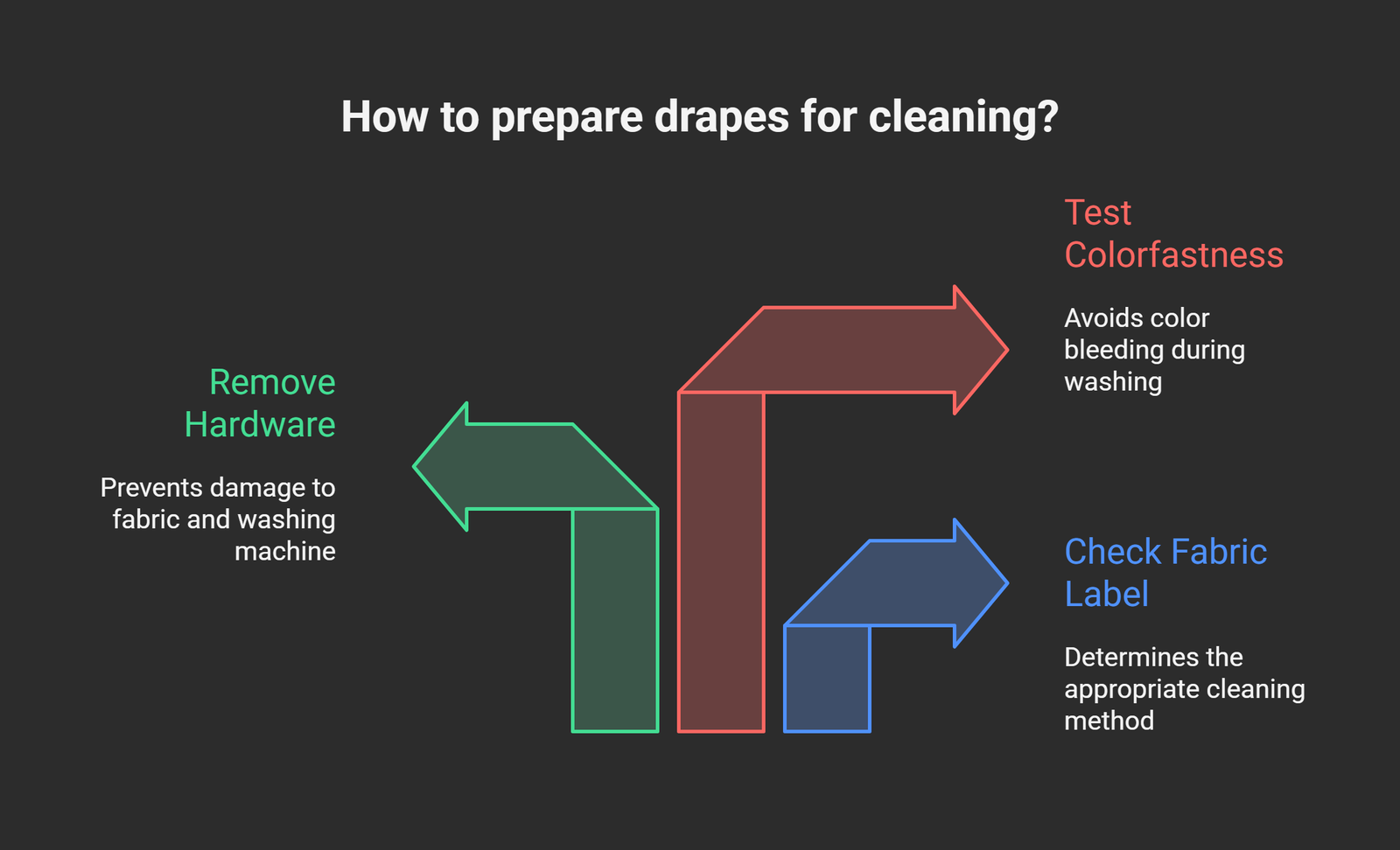
Before diving into deep cleaning, a little prep goes a long way:
- Check the fabric label – Some drapes are dry-clean only. Others can handle machine or hand-washing.
- Remove hooks, rings, and hardware – Leaving them on can snag fabric or damage your washing machine.
- Test for colorfastness – Dip a hidden corner in soapy water. If the color bleeds, take it to a professional instead.
Cleaning Methods by Fabric Type
1.Cotton Drapes
Cotton is sturdy but prone to wrinkling and stains.
- Pre-treat stains with a mild stain remover before washing.
- Machine wash on delicate with cold water and gentle detergent.
- Dry on low heat, removing while slightly damp.
- Iron damp drapes on the cotton setting with a pressing cloth to avoid scorch marks.
2.Synthetic Drapes (polyester, nylon, acrylic)
These fabrics are generally low-maintenance.
- Wash in cold water on a delicate cycle.
- Separate lights and darks to prevent color transfer.
- Tumble dry on low or medium heat, and rehang immediately to prevent wrinkles.
3.Silk Drapes
Silk is luxurious—and fragile.
- Hand wash only in lukewarm water with mild detergent.
- Never wring silk. Roll in a towel to remove excess water.
- Air-dry indoors away from heat and sunlight.
- Iron slightly damp silk on low with a pressing cloth.
4.Sheer Drapes
These light fabrics can discolor quickly if neglected.
- Soak in cold water for five minutes before washing.
- Use a delicate cycle or hand wash with mild detergent.
- Air-dry or tumble on “air only” with towels to keep fabric from balling.
- Rehang while damp to restore shape and prevent wrinkles.
5.Specialty Fabrics (wool, velvet, blackout-lined drapes)
- Wool & cashmere: Dry-clean only.
- Velvet: Brush with a damp chamois cloth instead of washing.
- Blackout-lined drapes: Avoid heat—follow manufacturer’s instructions to preserve the lining.
Cleaning Drapes Without Taking Them Down
Sometimes you just want a refresh without the hassle of unhooking everything. Here’s how:
-
- Vacuum weekly using a soft brush attachment, working from top to bottom.
- Remove pet hair with a lint roller or duct tape.
- Spot clean stains using mild detergent and a soft cloth.
- Steam clean hanging drapes to freshen fabric and smooth out light wrinkles.
These simple steps are perfect if you’re wondering how to clean drapes quickly without removing them, especially before guests arrive or during a weekly refresh.
Drying and Rehanging Drapes
Drying incorrectly can undo all your cleaning efforts. To get it right:
-
- Air-dry on a clothesline or drying rack for delicate fabrics.
- Use dryers sparingly—only on low or “air” settings.
- Rehang while slightly damp to let gravity pull out wrinkles naturally.
- Avoid direct sunlight when drying outdoors, as it can cause fading.
Tips to Keep Drapes Cleaner for Longer
-
-
- Dust curtain rods, finials, and valances regularly.
- Shake drapes lightly each evening to loosen dust.
- Keep windows clean to reduce dirt transfer.
- Use an air purifier to cut down airborne dust and pollen.
-
These small habits help maintain freshness between washes and extend the life of your drapes.
When to Call Professional Drapery Cleaners
Sometimes DIY just isn’t enough. Call in the pros if:
-
-
- Drapes are made from delicate or expensive fabrics.
- You’re dealing with stubborn stains or odor buildup.
- The drapes are oversized or too heavy to handle at home.
- It’s been several years since their last cleaning.
-
Professional services not only deep clean but also rehang your drapes perfectly, saving you time and effort.
Take Away
Learning how to clean drapes is all about knowing your fabric and choosing the right method. With regular vacuuming, spot cleaning, and annual deep cleans, your drapes will stay fresh, stylish, and allergen-free.
And remember—if you’re juggling work, kids, or prefer spotless results without lifting a finger, Clean and Shine is here to help. From drapery care to full house cleaning in Hackensack NJ, we make sure every corner of your home feels as fresh as your newly cleaned drapes.



3 Responses
What hidden dangers lurk in the corners of your new home that traditional cleaning might miss? As you transition between spaces, how can you ensure that you’re not just cleaning, but also protecting your health and well-being from allergens, pests, or lingering chemicals?
In a new home, hidden dangers often include dust mites, pet dander, pollen, and fine dust trapped in carpets, vents, and upholstery, which can keep circulating in the air and trigger allergies or breathing issues. Moisture-prone spots like under sinks, around windows, and in old grout may hide mold, even without a strong smell. Kitchens and cabinets can contain grease residue, food crumbs, or pest traces that attract insects and spread bacteria. There may also be leftover chemical residues from strong cleaners, pesticides, or air fresheners that can irritate skin and lungs.
To protect your health, focus on more than surface cleaning: use a HEPA vacuum, clean vents and fans, disinfect bathrooms and kitchens thoroughly, wash or steam soft materials, wipe inside cabinets and drawers, and rinse away harsh chemical buildup. The goal is not just a tidy space, but cleaner air, safer surfaces, and a healthier environment overall.