Commercial Cleaning Services: What Businesses Should Know Before Hiring
Executive Summary
Hiring a cleaning provider isn’t only a facilities decision. It’s a service that touches health, safety, security, and customer experience every single week. Most “bad cleaning” outcomes aren’t caused by lazy workers—they’re caused by vague scopes, weak supervision, and goals that aren’t measurable.
- Start with a written scope that matches your facility. The most reliable commercial cleaning relationships are built on a scope of work that explains what gets cleaned, how often, and what “done” looks like in restrooms, breakrooms, floors, and high-visibility areas.
- Use a risk-based approach to disinfecting. CDC guidance for facilities emphasizes that routine cleaning is often enough in most situations, while disinfection is best used when someone is sick or risk is higher—an approach that helps you avoid unnecessary chemical exposure and keep budgets focused where they matter most.
- Make contact time non-negotiable when disinfection is included. The EPA explains that disinfectant “contact time” means a surface must stay visibly wet for the full duration on the label, sometimes requiring reapplication if it dries too soon. If a vendor can’t explain that clearly, you may be buying marketing, not meaningful results.
- Demand chemical transparency and training. OSHA safety guidance notes that some cleaning chemicals can cause health problems (from skin burns to asthma) and highlights SDS access, worker training, ventilation, and specific warnings like never mixing bleach and ammonia.
- Local responsiveness improves consistency. If your business operates in Hackensack, Lodi, or Ridgewood, NJ, a nearby provider can respond faster when priorities shift—weather events, foot traffic surges, VIP visits, or a sudden illness in the workplace.
The Difference Between Cleaning, Sanitizing, and Disinfecting
Many businesses hire a “commercial cleaning company” expecting a simple outcome: a space that looks professional. In practice, you’re purchasing a bundle of tasks—routine cleaning, periodic deep cleaning, and sometimes disinfection. When these terms get blurred, you either overpay for unnecessary chemical steps or under-define what your team actually needs.
Start with a principle that has held up across industries: cleaning is the foundation. CDC facility guidance says that in most situations, cleaning regularly is enough to prevent the spread of germs. It also gives practical direction on cleaning hard surfaces using soap and water or cleaning products appropriate for the surface.
A simple decision rule most businesses can follow
For everyday operations, the CDC’s framework is straightforward: clean high-touch surfaces regularly, clean other surfaces when they are visibly dirty, and disinfect when someone is sick or at higher risk of getting sick. That last part is important—disinfection is a targeted tool, not a default requirement for every surface, every night.
Commercial Cleaning Services and EPA contact time: how “good intentions” fail in real life
If your contract includes disinfection, make sure it is operationally realistic. The EPA explains that contact time is the time a disinfectant must remain on the surface for it to be effective, and surfaces should remain visibly wet for the entire contact time—sometimes requiring reapplication if the surface dries early. That detail matters because “spray and wipe immediately” can look productive while failing to meet the label’s requirements.
There’s also a compliance angle. EPA labeling guidance notes that it is a violation to use a registered sanitizer product at less than the contact time specified on the product label. In plain terms: if you’re paying for disinfection, you want the vendor’s workflow to match label directions, not just the appearance of “something was sprayed.”
Commercial Cleaning Services and chemical risk: why “more disinfectant” is not always better
OSHA’s worker guidance on cleaning chemicals explains that cleaning chemicals can be hazardous and can cause problems ranging from skin rashes and burns to coughing and asthma. It also notes that disinfectants and sanitizers are generally more hazardous than cleaners, which is why a well-designed program uses the least hazardous chemical that accomplishes the task.
What a Professional Cleaning Scope of Work Should Include
A lot of cleaning frustration comes down to one line in a proposal: “standard janitorial.” (That phrase shows up in many janitorial services quotes, but it’s too vague to manage.) If you want stable results, insist on a scope of work that is tailored to your facility and written in plain language.
The best scopes have three layers: areas (what spaces are covered), tasks (what is done in each area), and frequency (how often tasks happen). They also clarify what is routine versus periodic deep cleaning so you don’t discover “that’s extra” after the first inspection.
The areas most businesses expect (and the “forgotten zones” that cause complaints)
Most commercial cleaning services cover the obvious areas—offices, restrooms, and common spaces. The complaints usually come from the edges: corners and baseboards, behind trash bins, the sticky line where the kitchen floor meets cabinets, fingerprints on glass near door handles, and dust on horizontal surfaces that catches sunlight.
A practical way to reduce surprises is to divide the building into zones and decide where “high-visibility” standards apply. Restrooms, reception areas, and conference rooms typically need higher attention. Storage rooms might be lower frequency. Defining this doesn’t make the plan complicated; it makes it cheaper to manage.
How to Set the Right Cleaning Frequency for Your Facility
Frequency isn’t about what looks nice in a brochure; it’s about traffic, usage, and risk. The CDC highlights high-touch surfaces as a priority for routine cleaning and recommends disinfection when someone is sick or when risk is higher. Use that logic to map your own “touchpoints”: handles, elevator buttons, restroom hardware, shared kitchen surfaces, reception counters, and shared devices.
Once you have the touch map, set a baseline schedule and build a “surge plan” for busy seasons or special events. This approach prevents over-cleaning low-impact areas while under-cleaning the spaces that actually shape perception.
Who Handles Supplies and Restocking in a Cleaning Contract?
Supplies can be a silent source of tension. Who provides soap, paper towels, and toilet paper? Who tracks inventory? If dispensers are in locked closets, who has access? If you expect the cleaning provider to restock, specify it, along with how consumables are priced. A clear agreement prevents the classic problem where the cleaning is “fine,” but employees are frustrated because the restroom is missing paper products.
Safety Standards, Staff Training, and Chemical Compliance in Professional Cleaning
Professional commercial cleaning is a safety-sensitive service. The team uses chemicals, works around people’s property, and operates in environments where ventilation and product selection matter. The best providers don’t rely on good intentions—they rely on documented training and clear rules.
Safety Data Sheets (SDS): What Businesses Should Request and Why
OSHA guidance for employers who use cleaning chemicals states that employers must obtain and maintain Safety Data Sheets (SDS) for hazardous cleaning products and ensure SDSs are readily accessible to workers. OSHA’s Hazard Communication Standard also requires safety data sheet information be readily accessible during each work shift to employees in their work area. As a client, that matters because your building is the worksite where those chemicals are used.
When you request SDS documentation, you’re not creating busywork. You’re making sure the provider can answer basic questions: What is used in restrooms versus breakrooms? What PPE is recommended? What is the spill procedure? If you ever need to investigate an odor complaint or a sensitivity issue, SDS information becomes a practical tool.
Why Proper Cleaning Training Matters for Chemical Safety
OSHA’s cleaning chemical guidance notes that mixing cleaning products containing bleach and ammonia can cause severe lung damage or death. It also highlights practical safe work practices: labeling containers, training on use and storage, using ventilation as needed, and providing appropriate protective equipment. When you interview a vendor, ask them to describe how these rules are trained, supervised, and enforced.
What “Green Cleaning” Really Means for Businesses
It’s smart to care about sustainability—and it’s smart to be skeptical of vague claims. OSHA specifically notes that the word “green” on a bottle does not ensure that a chemical is safe, and it recommends reviewing hazards. If you want a meaningful benchmark, consider third-party standards at the service level, not only product marketing.
Green Seal’s GS-42 standard for commercial and institutional cleaning services sets requirements aimed at ensuring a quality operation carried out by a highly trained workforce skilled in effective green cleaning practices. Even if you don’t require certification, GS-42 is a useful reference for what “serious” green cleaning looks like beyond product choice: training, procedures, and repeatability.
How to Vet a Cleaning Provider Before Signing a Contract
Switching cleaning vendors is disruptive. Keys, access routines, and staff expectations change quickly. That’s why the best time to evaluate consistency is before the contract—when you can compare how vendors think, not only what they promise.
What a Proper Cleaning Walkthrough Should Include
A real walkthrough is not a sales tour. A strong provider will ask about traffic patterns, problem areas, your most visible zones, and any constraints (quiet hours, security, sensitive rooms, flooring restrictions). They should also look at the number of restrooms, breakroom complexity, floor type, and high-touch patterns. If a vendor quotes without gathering enough detail, the price is either padded—or the plan will be understaffed.
Security, Keys, and Access Control Procedures
Cleaning teams often work when your staff is gone. Ask who holds keys, how keys are tracked, what happens if a key is lost, and how alarm procedures work. You’re looking for a provider with a calm, documented process—because professional cleaning is as much about trust controls as it is about mops and vacuums.
Where ISSA CIMS Standards Fit in Professional Cleaning
Some organizations prefer vendors aligned with management standards. ISSA’s Cleaning Industry Management Standard (CIMS) describes itself as a consensus-based framework and a roadmap to quality, efficiency, and customer trust. Certification is not the only way to judge quality, but a vendor familiar with CIMS-style controls often has stronger documentation, training routines, and inspection methods.
Vendor interview prompts that save time later:
- “Show me your scope template and how you customize it.” You’re looking for a provider who can translate your building into a written plan (areas, tasks, frequencies), not a vague promise to “take care of everything.”
- “How do you inspect and document quality?” Ask how often inspections happen, who performs them, and how issues are logged and closed out.
- “What products will you use here, and can you provide SDS?” A professional answer includes product lists, SDS access, dilution controls, and how the team handles ventilation and PPE.
- “How do you keep quality stable when staff changes?” Great vendors have site-specific notes, checklists, and supervisor verification so service doesn’t collapse when one person is out sick or moves to another job.
Contracts, Quality Control, and Accountability in Cleaning Programs
A contract should function as a shared operating plan. The best agreements are clear in the areas that usually create conflict: scope boundaries, inspection standards, and how problems are fixed.
How to Make Cleaning Results Measurable
“Clean” is subjective until you define it. Outcome language speeds up inspections and reduces arguments. For example: “Entry glass is free from visible fingerprints,” or “Restroom fixtures are free from visible residue,” or “Corners and edges are free of visible debris.” These statements are easy to verify—especially when you pair them with a simple monthly inspection checklist.
When Disinfection Is Included, Put Label Compliance in Writing
If your agreement includes disinfection, include a brief clause that disinfection will be performed according to EPA-registered product label directions, including required contact time. The EPA explains that the surface should remain visibly wet for the entire contact time and that reapplication may be needed if it dries early. Writing this into the agreement protects both sides: it prevents unrealistic expectations and prevents “shortcut” practices.
Plan for Rare but High-Impact Incidents
Even in non-medical workplaces, blood or other potentially infectious materials can appear (a first-aid incident, a cut, a nosebleed). OSHA’s Bloodborne Pathogens standard includes decontamination requirements for contaminated work surfaces and emphasizes maintaining a clean and sanitary worksite with an appropriate written schedule for cleaning and methods of decontamination. That’s another reason to hire a provider who can follow documented procedures when a situation is outside routine cleaning.
Pricing Factors and How to Compare Cleaning Quotes
Two quotes can differ significantly even when square footage is identical, especially when the proposals bundle multiple business cleaning services under one monthly number. That’s because pricing is driven by labor time—and labor time is driven by scope, frequency, and complexity. A fair comparison focuses less on the monthly total and more on what the vendor assumes about tasks and time.
The Variables That Affect Cleaning Labor Time the Most
In real facilities, a few variables drive most of the time: number of restrooms, floor type and square footage, breakroom complexity, glass, and the number of high-touch points. Specialized expectations—like detailed dusting, stainless polishing, or disinfection in defined zones—add time quickly.
Why “Disinfection Included” Can Be Either a Value or a Risk
Disinfection requires label-compliant workflows. The EPA explains that contact time requires surfaces to remain visibly wet for the full duration, sometimes requiring additional product. If a proposal “includes disinfection” without enough labor time to support it, the risk is that disinfection becomes a quick wipe rather than a label-compliant process.
A Practical Method for Apples-to-Apples Proposal Comparisons
When reviewing proposals, ask each vendor to present pricing using the same structure:
- Scope by area with frequency. Example: “Restrooms: daily clean + weekly detail,” “Lobby glass: 3x/week,” “Breakroom appliances: weekly wipe-down + monthly deep clean.” This prevents “I thought that was included” disputes.
- Labor assumptions. Ask how many labor-hours per visit the vendor expects and how they staff your building. If a quote is far cheaper than others, it often assumes a pace that will not hold up over time.
- Supply responsibility. Clarify whether the vendor supplies chemicals and tools, whether consumables are included, and whether you need to provide trash liners or paper goods.
- Quality-control method. A cheaper plan can become expensive if it lacks inspections and rework processes—because you pay through time spent managing recurring problems.
This format turns a “mystery number” into an operating plan you can evaluate, compare, and manage.
Industry-Specific Expectations for Offices, Medical, Retail, and Warehouses
“Commercial Cleaning Services” is not one service; it’s a category. The best providers adjust methods to the building’s purpose and the people who use it. Here are the differences that most affect outcomes.
Office Cleaning: Balancing First Impressions and High-Touch Control
Offices succeed with a plan that protects first impressions (lobby, conference rooms, restrooms) and prevents “daily comfort issues” that distract employees (overflowing trash, dusty surfaces, sticky breakroom floors). CDC guidance on cleaning and disinfecting provides a useful logic model for offices: keep high-touch surfaces routinely cleaned, and use disinfection when risk is higher.
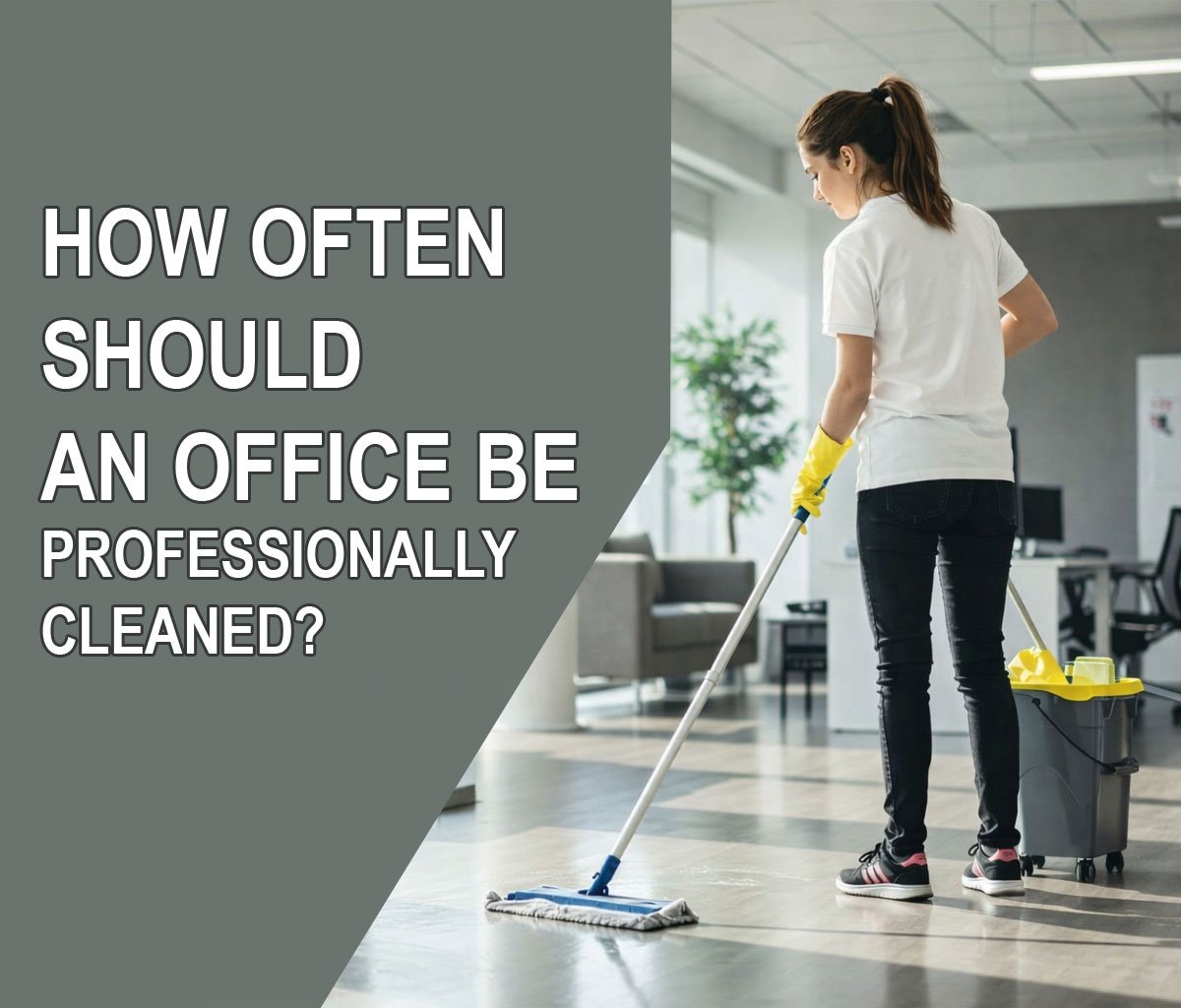
If you’re adjusting your cleaning frequency, this internal guide can help you align scheduling with real usage patterns: Office Cleaning Frequency in Hackensack, NJ.
Cleaning Medical-Facing Spaces: Higher Consequences, Tighter Controls
Medical-facing environments raise the stakes because contamination risk is higher and disinfectant use is more common. Even outside hospitals, workplaces can encounter blood or other potentially infectious materials after a first-aid incident. OSHA’s Bloodborne Pathogens standard includes clear rules for decontaminating contaminated work surfaces with an appropriate disinfectant and for maintaining a clean and sanitary worksite.
Retail and Customer-Facing Cleaning: Why Consistency Wins
Retail spaces need predictable daily appearance because customers make fast judgments: floors, glass, restrooms, and the “freshness” of the space. If your business experiences surges (weekends, holiday seasons), plan for extra entryway work and front-of-house detailing rather than trying to “deep clean everything” on a schedule that doesn’t match traffic.
Cleaning Warehouses and Light Industrial Sites: Dust, Safety, and Workflow
Warehouses rarely need lobby-style polish, but they do need smart control of dust, debris, and shared areas like breakrooms and restrooms. Safety is the priority: clear walkways, no slippery residues, and cleaning methods that don’t interfere with equipment or production schedules.
Commercial Cleaning Services in Hackensack, Lodi, and Ridgewood, NJ
Local coverage matters more than most businesses realize. When a provider serves your area consistently, you’re more likely to get stable staffing, faster response to urgent issues, and supervision that can actually visit the site (instead of trying to manage everything remotely).
Clean and Shine provides professional business cleaning throughout Hackensack and nearby Bergen County communities, including Lodi and Ridgewood. If you want to review service details, start here: Commercial Cleaning Services.
You can also explore the main website to see the company’s services: Clean and Shine NJ.
Get a quote that matches your building
Want a cleaning plan that’s easy to inspect, easy to manage, and built around your business hours? Request a no-obligation walkthrough and quote. You’ll receive a scope that matches your facility, a frequency plan that makes sense, and clear expectations on supplies and quality control.
Request a Free Quote / Contact Clean and Shine NJ
What Businesses Should Ask on Day One
The first two weeks of a new cleaning relationship determine whether it becomes “easy” or “constant management.” Treat onboarding like a short project: confirm priorities, confirm products, establish communication, and set inspection expectations.
Align on Priorities and Non-Negotiables
Every business has a few things that matter disproportionately. It might be restroom freshness, polished glass, spotless conference rooms, or dust-free horizontal surfaces. Don’t assume your vendor will guess. Write down your top priorities and ask the provider to explain the exact steps and inspection points that protect them.
Confirm Product Lists, SDS Access, and Disinfection Rules
Get the product list in writing. If disinfection is included, confirm which EPA-registered products are used in which areas and how the team meets contact time. The EPA explains that surfaces should remain visibly wet for the full contact time and may require reapplication. Make sure you’re paying for label-compliant performance, not a quick wipe that only looks reassuring.
Set a Communication Rhythm Before Issues Appear
Agree on how issues will be reported and resolved (email, a shared log, or a simple ticket). Decide who approves scope changes and how quickly urgent items are handled. A predictable rhythm (weekly in the first month, then monthly) prevents small issues from turning into recurring frustration.
The One External Resource Worth Bookmarking
If you want a neutral, authoritative reference point for your internal cleaning policy, the CDC maintains clear guidance on when and how to clean and disinfect facilities: CDC: When and How to Clean and Disinfect a Facility.
Tip: If a vendor recommends routine disinfection for every surface, every night, regardless of facility type, ask them to explain how that approach matches CDC’s risk-based guidance—and how they meet EPA contact time in real workflows.
Commercial Cleaning Services FAQ
What’s the difference between cleaning, sanitizing, and disinfecting in commercial cleaning?
Cleaning removes dirt and lowers germs through wiping, scrubbing, or mopping. Sanitizing reduces germs to safer levels. Disinfecting uses chemicals to destroy or inactivate germs. OSHA worker guidance emphasizes that these steps serve different purposes and that disinfectants and sanitizers are generally more hazardous than cleaners—so the plan should use the least hazardous approach that accomplishes the goal.
Do we need disinfection every night, or is routine cleaning enough?
In many workplaces, routine cleaning is often sufficient. The CDC advises cleaning high-touch surfaces regularly, cleaning other surfaces when visibly dirty, and disinfecting when someone is sick or when risk is higher. The right plan depends on your traffic, the people you serve, and the setting.
Why does disinfectant “contact time” matter?
The EPA explains that contact time is the time a disinfectant must remain on the surface to be effective, and that surfaces should remain visibly wet for the full duration—sometimes requiring reapplication. If the workflow doesn’t account for contact time, it may not deliver the expected disinfection result.
What documents should a commercial cleaning company provide before we sign?
Request a written scope of work, a quality-control and issue-resolution process, proof of insurance, and a list of onsite chemicals with SDS for each product. OSHA guidance emphasizes SDS access and worker training, and OSHA’s Hazard Communication Standard requires employees receive information and training on hazardous chemicals and have access to labels and SDS.
Are “green cleaning” products always safer for employees?
Not always. OSHA notes that “green” wording does not guarantee safety and recommends reviewing hazards. For organizations that want a stronger benchmark, Green Seal’s GS-42 standard describes requirements for commercial and institutional cleaning services with a focus on trained staff and effective green cleaning practices.
How Can You Compare Cleaning Quotes Fairly?
Use the same scope and frequency across bids. Ask each vendor to describe labor assumptions, supply responsibility, and quality-control methods. The goal is to avoid a plan that is too thin on labor time to deliver consistent outcomes.
Do You Offer Commercial Cleaning in Hackensack, Lodi, and Ridgewood, NJ?
Yes. Clean and Shine NJ serves businesses in Hackensack and nearby Bergen County towns including Lodi and Ridgewood. Start here to request your quote: Contact Clean and Shine NJ.