
How to Clean Popcorn Ceilings (2026 Guide + Tips)
Popcorn ceilings—also known as acoustic or cottage cheese ceilings—were wildly popular in homes from the 1950s through the 1980s. They covered imperfections, absorbed sound, and were inexpensive to install. The downside? They’re absolute dust magnets and notoriously tricky to maintain.
If you’ve ever stared at cobwebs or stains clinging to those little bumps, you know the frustration. The good news is that learning how to clean popcorn ceilings is possible with the right tools, safe methods, and a bit of patience. Just like with other delicate household surfaces—such as fabric window treatments that require special care when you clean drapes properly — using the correct method makes all the difference. Let’s walk through step-by-step techniques that will keep your ceilings clean without damaging their delicate texture.
How Often Should You Clean Popcorn Ceilings?
Unlike walls or floors, your ceiling doesn’t need frequent scrubbing. In fact, too much cleaning can cause the texture to flake off.
- General rule: Once a year is plenty for most homes.
- Every few years: If your ceilings don’t collect much dust.
- More often if:
-
- You have pets (fur floats upward, too).
- You live in a dusty or humid environment.
- You notice smoke stains, cooking residue, or mildew spots.
-
Remember—less is more. The less frequently you disturb a popcorn ceiling, the longer its texture lasts.
Safety Considerations Before Cleaning
Before you start, protect both your home and yourself:
-
- Test for asbestos if your ceiling was installed before 1980. If positive, call a professional—never DIY.
- Protect your room by covering floors and furniture with drop cloths or plastic sheets.
- Gear up with a mask, goggles, gloves, and even a hat—falling dust is inevitable.
- Ventilate well by opening windows or using a fan.
These precautions keep you safe and reduce cleanup after you’re done.
Tools & Supplies You’ll Need To Clean Popcorn Ceilings
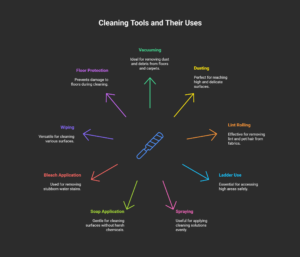
- Vacuum with brush attachment
- Microfiber or feather duster with extension pole
- Lint roller on an extension stick
- Step ladder
- Spray bottle
- Mild dish soap
- Bleach (for water stains)
- Sponges and clean cloths
- Drop cloths for the floor
Step-by-Step Methods for Dusting Popcorn Ceilings
Lint Roller Method
-
- Attach a sticky lint roller to an extension pole.
- Test a hidden spot to make sure the adhesive doesn’t pull off the texture.
- Gently roll across the ceiling, replacing sheets as they fill up with dust.
This method is great for low ceilings or quick touch-ups.
Vacuum Method
-
- Fit your vacuum with a soft brush attachment.
- Climb a step ladder and gently run it across the surface.
- Avoid pressing too hard—strong suction can pull off chunks of texture.
This is the fastest way to remove cobwebs and dust.
Microfiber or Feather Duster
-
- Use an extendable duster for higher ceilings.
- Angle the duster head at 90 degrees to sweep across the surface.
- For rougher textures, a feather duster is less likely to snag.
Perfect for routine light cleaning.
Removing Stains From Popcorn Ceilings
Even if you know how to clean popcorn ceilings, stains are where things get tricky. Here are the safest methods:
-
- Grease or smoke stains: Mix warm water with a drop of dish soap. Use a damp (not dripping) sponge or thick-nap paint roller to dab the stain.
- Water or mildew stains: Mix one part bleach with three parts water in a spray bottle. Lightly mist the stained area, let it dry, and repeat if necessary.
- Stubborn stains: Apply a stain-blocking primer followed by ceiling paint. Use a thick roller to cover the texture without flattening it.
Always test in a small area first—moisture can make popcorn ceilings crumble.
Deep Cleaning & Advanced Methods
If dusting and stain removal aren’t enough, try these advanced techniques:
-
- Dry foam cleaners: Designed for textured ceilings, they lift dirt without soaking.
- Rolling method: Use a barely damp paint roller with mild detergent for larger sections. Follow immediately with a dry roller.
- Fabric softener spray: Mix one part fabric softener with four parts water to freshen and loosen dirt.
- Vinegar or peroxide: Useful for mildew or odor problems, but always spot test first.
Patience is key—work in small 4×4 foot sections and let each area dry fully before moving on.
Drying and Ventilation
Popcorn ceilings hate moisture, so drying is critical:
- Use fans and open windows to speed up airflow.
- Avoid leaving the room humid—moisture can make the texture sag or fall.
- Let the ceiling dry for at least 24 hours before deciding if a second cleaning is needed.
Preventative Maintenance Tips
Once you’ve gone through the effort, keep your ceilings looking fresh with these habits:
- Dust with a soft brush every few months.
- Use an air purifier to cut down on airborne dust and pet dander.
- Control humidity with dehumidifiers in damp areas.
- Address leaks immediately—water stains only get worse.
When to Call Professionals
DIY is fine for light dusting, but professional help is best if:
-
- Your ceiling may contain asbestos.
- You’re dealing with widespread mold or water damage.
- Your ceilings are too high to reach safely.
- The popcorn texture is already peeling or flaking.
Professional cleaning or removal ensures safety and gives you flawless results without the hassle.
Frequently Asked Questions About Cleaning Popcorn Ceilings
Can you clean popcorn ceilings with a vacuum?
Yes, you can clean popcorn ceilings with a vacuum, but it must be done carefully. Use a vacuum with a soft brush attachment to gently remove dust and cobwebs without damaging the textured surface. Avoid pressing too hard, as popcorn ceilings are fragile and can crumble.
How often should popcorn ceilings be cleaned?
Popcorn ceilings should be lightly cleaned every 6–12 months to remove dust buildup, especially in kitchens, hallways, and high-traffic areas. Homes with pets, smokers, or high humidity may require more frequent cleaning to prevent stains and discoloration.
What tools are best for popcorn ceiling cleaning?
The safest tools for cleaning popcorn ceilings include:
- A vacuum with a soft brush attachment
- A microfiber duster with an extension pole
- A dry sponge for spot cleaning
- Mild cleaning solution for stain treatment
Avoid using excessive water, harsh chemicals, or abrasive tools, as they can damage the ceiling texture.
Summary
Figuring out how to clean popcorn ceilings is all about being gentle, patient, and using the right tools. With simple methods like vacuuming, dusting, or carefully treating stains, you can restore your ceilings without creating a bigger mess.
But if the job feels overwhelming—or if your ceiling is showing serious damage—calling a professional cleaning service like Clean and Shine is the safest choice. From everyday cleaning to tackling tricky textured surfaces, we help Bergen County homeowners keep their spaces spotless and healthy. For complete peace of mind, our trusted hackensack cleaners services ensure every corner of your home, from floors to ceilings, is fresh, clean, and worry-free.
So the next time you look up and wonder how to deal with that dusty ceiling, remember—you now know exactly how to clean popcorn ceilings the right way.




One Response
good article